
















Huawei Powers the Middle East’s Next-Gen Digital Infrastructure with AI Computing and Open Agent Innovations at MWC 2026
Announced at MWC Barcelona 2026, Huawei introduces its latest SuperPoD AI computing architecture alongside an open-source agent communication framework to support intelligent networks and sovereign-ready digital infrastructure.
Dubai, United Arab Emirates, March 3, 2026
Huawei unveiled a series of innovations spanning high-performance AI computing and open network intelligence frameworks at MWC Barcelona 2026. The new SuperPoD portfolio and the open-source A2A-T (Agent-to-Agent for Telecom) initiative aim to strengthen the foundation for intelligent infrastructure across the Middle East.
As governments and enterprises across the region accelerate AI adoption, expand sovereign cloud capabilities, and modernize telecom networks, Huawei’s latest announcements reflect a coordinated approach to delivering both the computing power and the collaborative intelligence required for the next phase of digital transformation.
SuperPoD for large-scale computing
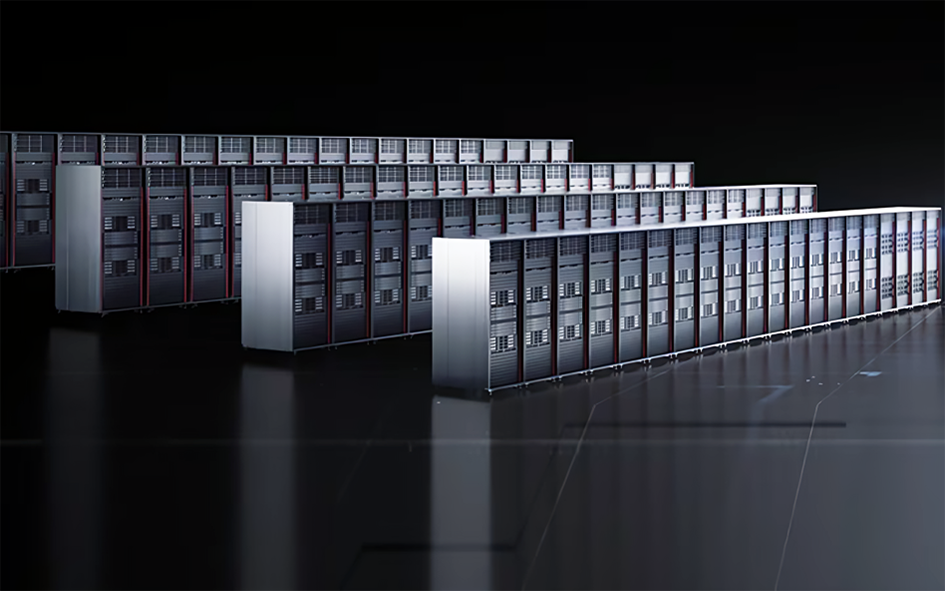
Among the key highlights unveiled at MWC Barcelona 2026 is Huawei’s latest SuperPoD portfolio, including the Atlas 950 SuperPoD and TaiShan 950 SuperPoD, engineered to support large-scale AI training and inference.
Powered by Huawei’s UnifiedBus interconnect architecture, the Atlas 950 SuperPoD can connect up to 8,192 NPUs into a single logical system, delivering ultra-high bandwidth and low latency performance. This enables organizations to operate advanced AI models as one cohesive computing environment rather than fragmented clusters.
For Middle East markets investing heavily in artificial intelligence, smart city infrastructure, financial services digitisation, and energy sector optimisation, such scale is increasingly critical. The architecture supports the development of large Arabic-language models, AI-powered government platforms, and enterprise-grade analytics, all aligned with regional ambitions to localise high-performance computing capabilities.
Huawei also introduced the TaiShan 950 SuperPoD, positioned as the industry’s first general-purpose computing SuperPoD, alongside next-generation TaiShan servers. These solutions offer flexible performance options for hyperscale data centres and enterprise environments across the region.
Open-Source A2A-T Framework enabling network intelligence
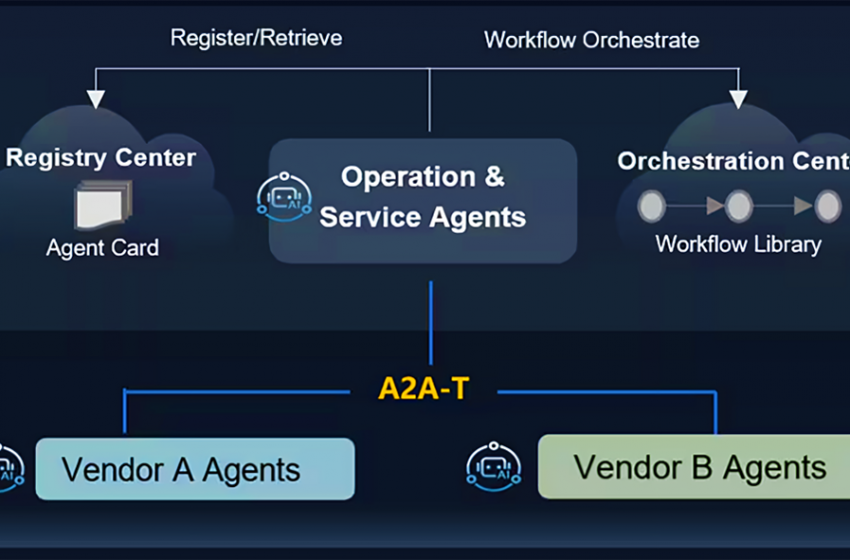
Complementing the computing infrastructure is Huawei’s announcement of its open-source A2A-T software project, designed to standardise how AI agents communicate within telecom networks.
As operators transition toward AI-native and 5G-Advanced (5G-A) networks, coordination between multiple intelligent agents becomes essential. A2A-T provides a unified framework that enables systems and vendors to collaborate more efficiently, significantly shortening integration timelines and simplifying cross-domain operations.
For telecom operators across the Middle East, many of whom are global leaders in 5G deployment, this framework supports faster automation, improved network resilience, and more agile service innovation. By reducing integration complexity and enabling smoother collaboration between systems, A2A-T helps accelerate the evolution toward autonomous networks.
The open-source project includes key components such as a protocol SDK for agent integration, a registry centre for authentication and coordination, and an orchestration platform supporting visual workflow management.
Open collaboration and ecosystem growth
Both innovations are built on Huawei’s open-source strategy and collaborative ecosystem approach.
The company plays an active role in advancing openEuler, one of the world’s fastest-growing open-source operating system communities, and has fully open-sourced its CANN heterogeneous computing architecture. The latest release of openEuler, optimised for SuperPoD deployments, further supports AI-scale workloads and high-density computing environments.
In Saudi Arabia, where Vision 2030 is driving large-scale digital transformation, openEuler featured prominently at the 2025 Saudi-China Open-Source Software Forum in Riyadh, reflecting the Kingdom’s focus on strengthening open-source foundations and building localized, future-ready infrastructure.
Across the Middle East, where economic diversification strategies increasingly centre on advanced technologies and knowledge economies, Huawei’s open-source initiatives aim to support universities, startups, telecom operators, and public-sector innovation programmes.
Power, coordination, and openness for the intelligent era
By combining large-scale AI computing capability with open agent communication standards, all built on open-source foundations, Huawei’s latest announcements at MWC 2026 reflect an integrated approach to digital infrastructure development.
For partners across the Middle East, this approach supports the deployment of scalable AI systems, intelligent telecom networks, and collaborative innovation ecosystems designed to meet the demands of the Agentic Internet era.
Huawei invites industry stakeholders from across the region to engage with these innovations and explore new pathways for building intelligent, resilient, and future-ready digital infrastructure.